Domain technical-development.de kaufen?
Wir ziehen mit dem Projekt
technical-development.de um.
Sind Sie am Kauf der Domain
technical-development.de interessiert?
domain@kv-gmbh.de · 0541-91531010
Domain technical-development.de kaufen?
Wer hat die Webmaschine erfunden?
Wer hat die Webmaschine erfunden? Die Webmaschine wurde im 18. Jahrhundert von dem Engländer Edmund Cartwright erfunden. Er entwickelte die erste mechanische Webmaschine, die den Prozess des Webens von Stoffen automatisierte und die Produktion erheblich steigerte. Cartwrights Erfindung revolutionierte die Textilindustrie und trug maßgeblich zur Industrialisierung bei. Seine Webmaschine legte den Grundstein für die moderne Textilproduktion und veränderte die Art und Weise, wie Stoffe hergestellt wurden. **
Wann wurde die Webmaschine erfunden?
Die Webmaschine wurde im Jahr 1785 von dem Engländer Edmund Cartwright erfunden. Sie revolutionierte die Textilindustrie, da sie den Prozess des Webens von Stoffen automatisierte und beschleunigte. Zuvor mussten Stoffe per Hand gewebt werden, was sehr zeitaufwendig war. Mit der Erfindung der Webmaschine konnten Stoffe nun viel schneller und in größerer Menge hergestellt werden. Dies trug maßgeblich zur Industrialisierung und Modernisierung der Textilproduktion bei. **

Ähnliche Suchbegriffe für Webmaschine
Top-Angebote
Produkte zum Begriff Webmaschine:
-
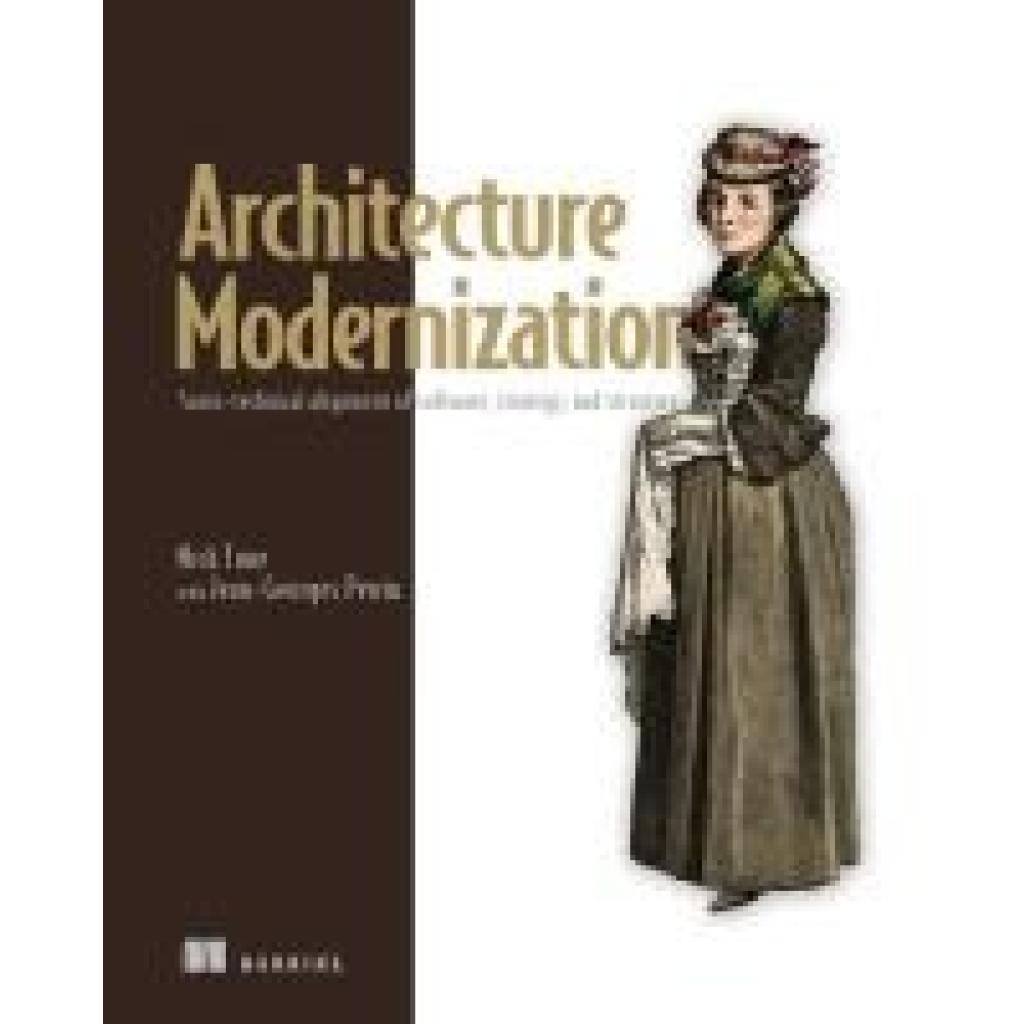
Tune, Nick: Architecture ModernizationArchitecture Modernization , Proven techniques and principles for modernizing legacy systems into new architectures that deliver serious competitive advantage. For a business to thrive, it needs a modern software architecture that is aligned with its corporate architecture. This book presents concrete practices that sync software, product, strategy, team dynamics, and work practices. You’ll evolve your technical and social architecture together, reducing needless dependencies and achieving faster flow of innovation across your organization. In Architecture Modernization: Socio-technical alignment of software, strategy, and structure you’ll learn how to: Identify strategic ambitions and challenges using listening and mapping tours Visualize your business landscape and crucial capabilities with Wardley Mapping Create a product taxonomy as a framework for your architecture Run big picture EventStorming workshops to map business domains Apply Team Topologies patterns to identify and refine value streams Design loosely coupled, domain-aligned software architectures Build internal developer platforms for rapid, reliable evolution Implement data mesh principles and tools to revolutionize data engineering Deliver compelling modernization roadmaps focused on continuous value Architecture Modernization: Socio-technical alignment of software, strategy, and structure shows you how to turn the practice of architecting systems into a transformative process for your entire company. Chapter-by-chapter, you’ll identify the reasons and benefits of modernization, design an architecture that works for your business, and then implement your new approach in a progressive and sustainable manner. Every technique is illustrated with insightful industry examples and an interactive Miro board that lets you dig deeper. Forewords by Matthew Skelton and Xin Yao. Purchase of the print book includes a free eBook in PDF, Kindle, and ePub formats from Manning Publications. About the technology The decisions you make about your software are inherently connected to the decisions you make about your business. Why not turn the mundane task of modernizing legacy systems into a transformative process for your entire company? This book shows you how! It reveals a socio-technical approach to align your software and products with organizational dynamics and ways of working. About the book Architecture Modernization: Socio-technical alignment of software, strategy, and structure presents a clear path for upgrading your entire organization when you re-imagine your software. In it, you’ll learn to combine practices like Domain-Driven Design, Event Storming, and Wardley Mapping to discover user needs, design optimal architecture, and avoid falling back into old habits. Provocative examples from Danske, Salesforce, the UK Government, and others show the real-world result of each approach, identifying techniques you can apply effectively in your own business. What's inside Uncover cross-org challenges and opportunities A product-centric approach to architecture Envision architecture as a portfolio to prioritize investment About the reader For CTOs, tech leads, and principal engineers who decide on architecture and organization design. About the author Nick Tune helps organizations modernize their architectures through empowered product teams and continuous delivery. Jean-Georges Perrin builds innovative and modern data platforms. The technical editor on this book was Kamil Nicieja. Table of Contents 1 What is architecture modernization? 2 Preparing for the journey 3 Business objectives 4 Listening and mapping tours 5 Wardley Mapping 6 Product taxonomy 7 Big picture EventStorming 8 Product and domain modernization 9 Identifying domains and subdomains 10 Strategic IT portfolio 11 Team Topologies 12 Loosely coupled software architecture 13 Internal developer platforms 14 Data mesh revolutionizing data engineering 15 Architecture modernization enabling teams 16 Strategy and roadmaps 17 Learning and upskilling , > , Erscheinungsjahr: 20240220, Autoren: Tune, Nick~Perrin, Jean-Georges, Seitenzahl/Blattzahl: 488, Themenüberschrift: COMPUTERS / Enterprise Applications / General, Keyword: Event Storming; Team Topologies; and Domain-Driven Design; product development techniques; software architecture; business strategy, Fachschema: Datenverarbeitung / Anwendungen / Betrieb, Verwaltung~Informatik, Fachkategorie: Informatik, Warengruppe: HC/Informatik, UNSPSC: 49019900, Warenverzeichnis für die Außenhandelsstatistik: 49019900, Länge: 232, Breite: 192, Höhe: 30, Gewicht: 896, Produktform: Kartoniert, Genre: Importe,43,68 €*Versand: 0,00 €Sichere Weiterleitung zum Anbieter
-
Oldenbourg Social Reform, Modernization and Technical Diplomacy (Englisch, Softcover, Véronique Plata-Stenger) (56223901)Oldenbourg Social Reform, Modernization and Technical Diplomacy (Englisch, Softcover, Véronique Plata-Stenger) (56223901)29,95 €*Versand: 0,00 €Sichere Weiterleitung zum Anbieter



-
Wie funktioniert eine Webmaschine und welche Materialien kann sie verarbeiten?
Eine Webmaschine besteht aus einem Webstuhl, der Fäden horizontal und vertikal verwebt, um Stoff herzustellen. Sie kann verschiedene Materialien wie Baumwolle, Wolle, Seide, Polyester und Leinen verarbeiten, je nach den Anforderungen des Endprodukts. Die Maschine arbeitet durch das Zusammenspiel von Kett- und Schussfäden, die miteinander verflochten werden, um das gewünschte Gewebe zu erzeugen. **
-
Wie funktioniert eine Webmaschine und welche Arten von Webmaschinen gibt es?
Eine Webmaschine ist eine Maschine, die Textilien herstellt, indem sie Fäden miteinander verwebt. Die Fäden werden durch Schussfäden verbunden, die horizontal durch das Gewebe geführt werden. Es gibt verschiedene Arten von Webmaschinen, darunter Jacquard-Webmaschinen, Rundwebmaschinen und Dobby-Webmaschinen. **
-
Wie kann eine Webmaschine effizient eingesetzt werden, um hochwertige Textilien herzustellen?
Eine Webmaschine kann effizient eingesetzt werden, indem sie kontinuierlich und präzise arbeitet, um hochwertige Textilien herzustellen. Durch die Verwendung von qualitativ hochwertigen Materialien und einer genauen Einstellung der Maschine können fehlerfreie Stoffe produziert werden. Zudem ist eine regelmäßige Wartung und Überwachung der Maschine entscheidend, um einen reibungslosen Produktionsprozess sicherzustellen. **
-
Wie funktioniert eine Webmaschine und welche Materialien können damit hergestellt werden?
Eine Webmaschine webt Fäden zu einem Stoff, indem sie sie horizontal und vertikal miteinander verkreuzt. Dadurch entsteht ein Gewebe oder eine Textilstruktur. Mit einer Webmaschine können verschiedene Materialien wie Baumwolle, Wolle, Seide, Polyester und viele andere Stoffe hergestellt werden. **


Wie funktioniert eine Webmaschine und welche Materialien können damit verarbeitet werden?
Eine Webmaschine besteht aus einem Webstuhl, der Fäden horizontal und vertikal miteinander verwebt, um Stoffe herzustellen. Verschiedene Materialien wie Baumwolle, Wolle, Seide, Polyester und viele andere können mit einer Webmaschine verarbeitet werden. Die Fäden werden durch das Weben miteinander verbunden, um verschiedene Muster und Designs zu erzeugen. **
Wie funktioniert die Webmaschine und welche verschiedenen Arten von Webmaschinen gibt es?
Die Webmaschine besteht aus einem Webstuhl, der Fäden vertikal und horizontal verwebt, um Stoff herzustellen. Es gibt verschiedene Arten von Webmaschinen, darunter Handwebstühle, mechanische Webstühle und computergesteuerte Webmaschinen. Jede Art hat ihre eigenen Vor- und Nachteile in Bezug auf Geschwindigkeit, Präzision und Komplexität der Muster. **
Top-Angebote
Produkte zum Begriff Webmaschine:
-
Tune, Nick: Architecture ModernizationArchitecture Modernization , Proven techniques and principles for modernizing legacy systems into new architectures that deliver serious competitive advantage. For a business to thrive, it needs a modern software architecture that is aligned with its corporate architecture. This book presents concrete practices that sync software, product, strategy, team dynamics, and work practices. You’ll evolve your technical and social architecture together, reducing needless dependencies and achieving faster flow of innovation across your organization. In Architecture Modernization: Socio-technical alignment of software, strategy, and structure you’ll learn how to: Identify strategic ambitions and challenges using listening and mapping tours Visualize your business landscape and crucial capabilities with Wardley Mapping Create a product taxonomy as a framework for your architecture Run big picture EventStorming workshops to map business domains Apply Team Topologies patterns to identify and refine value streams Design loosely coupled, domain-aligned software architectures Build internal developer platforms for rapid, reliable evolution Implement data mesh principles and tools to revolutionize data engineering Deliver compelling modernization roadmaps focused on continuous value Architecture Modernization: Socio-technical alignment of software, strategy, and structure shows you how to turn the practice of architecting systems into a transformative process for your entire company. Chapter-by-chapter, you’ll identify the reasons and benefits of modernization, design an architecture that works for your business, and then implement your new approach in a progressive and sustainable manner. Every technique is illustrated with insightful industry examples and an interactive Miro board that lets you dig deeper. Forewords by Matthew Skelton and Xin Yao. Purchase of the print book includes a free eBook in PDF, Kindle, and ePub formats from Manning Publications. About the technology The decisions you make about your software are inherently connected to the decisions you make about your business. Why not turn the mundane task of modernizing legacy systems into a transformative process for your entire company? This book shows you how! It reveals a socio-technical approach to align your software and products with organizational dynamics and ways of working. About the book Architecture Modernization: Socio-technical alignment of software, strategy, and structure presents a clear path for upgrading your entire organization when you re-imagine your software. In it, you’ll learn to combine practices like Domain-Driven Design, Event Storming, and Wardley Mapping to discover user needs, design optimal architecture, and avoid falling back into old habits. Provocative examples from Danske, Salesforce, the UK Government, and others show the real-world result of each approach, identifying techniques you can apply effectively in your own business. What's inside Uncover cross-org challenges and opportunities A product-centric approach to architecture Envision architecture as a portfolio to prioritize investment About the reader For CTOs, tech leads, and principal engineers who decide on architecture and organization design. About the author Nick Tune helps organizations modernize their architectures through empowered product teams and continuous delivery. Jean-Georges Perrin builds innovative and modern data platforms. The technical editor on this book was Kamil Nicieja. Table of Contents 1 What is architecture modernization? 2 Preparing for the journey 3 Business objectives 4 Listening and mapping tours 5 Wardley Mapping 6 Product taxonomy 7 Big picture EventStorming 8 Product and domain modernization 9 Identifying domains and subdomains 10 Strategic IT portfolio 11 Team Topologies 12 Loosely coupled software architecture 13 Internal developer platforms 14 Data mesh revolutionizing data engineering 15 Architecture modernization enabling teams 16 Strategy and roadmaps 17 Learning and upskilling , > , Erscheinungsjahr: 20240220, Autoren: Tune, Nick~Perrin, Jean-Georges, Seitenzahl/Blattzahl: 488, Themenüberschrift: COMPUTERS / Enterprise Applications / General, Keyword: Event Storming; Team Topologies; and Domain-Driven Design; product development techniques; software architecture; business strategy, Fachschema: Datenverarbeitung / Anwendungen / Betrieb, Verwaltung~Informatik, Fachkategorie: Informatik, Warengruppe: HC/Informatik, UNSPSC: 49019900, Warenverzeichnis für die Außenhandelsstatistik: 49019900, Länge: 232, Breite: 192, Höhe: 30, Gewicht: 896, Produktform: Kartoniert, Genre: Importe,43,68 €*Versand: 0,00 €Sichere Weiterleitung zum Anbieter
-
Wer hat die Webmaschine erfunden?
Wer hat die Webmaschine erfunden? Die Webmaschine wurde im 18. Jahrhundert von dem Engländer Edmund Cartwright erfunden. Er entwickelte die erste mechanische Webmaschine, die den Prozess des Webens von Stoffen automatisierte und die Produktion erheblich steigerte. Cartwrights Erfindung revolutionierte die Textilindustrie und trug maßgeblich zur Industrialisierung bei. Seine Webmaschine legte den Grundstein für die moderne Textilproduktion und veränderte die Art und Weise, wie Stoffe hergestellt wurden. **
-
Wann wurde die Webmaschine erfunden?
Die Webmaschine wurde im Jahr 1785 von dem Engländer Edmund Cartwright erfunden. Sie revolutionierte die Textilindustrie, da sie den Prozess des Webens von Stoffen automatisierte und beschleunigte. Zuvor mussten Stoffe per Hand gewebt werden, was sehr zeitaufwendig war. Mit der Erfindung der Webmaschine konnten Stoffe nun viel schneller und in größerer Menge hergestellt werden. Dies trug maßgeblich zur Industrialisierung und Modernisierung der Textilproduktion bei. **
-
Wie funktioniert eine Webmaschine und welche Materialien kann sie verarbeiten?
Eine Webmaschine besteht aus einem Webstuhl, der Fäden horizontal und vertikal verwebt, um Stoff herzustellen. Sie kann verschiedene Materialien wie Baumwolle, Wolle, Seide, Polyester und Leinen verarbeiten, je nach den Anforderungen des Endprodukts. Die Maschine arbeitet durch das Zusammenspiel von Kett- und Schussfäden, die miteinander verflochten werden, um das gewünschte Gewebe zu erzeugen. **
-
Wie funktioniert eine Webmaschine und welche Arten von Webmaschinen gibt es?
Eine Webmaschine ist eine Maschine, die Textilien herstellt, indem sie Fäden miteinander verwebt. Die Fäden werden durch Schussfäden verbunden, die horizontal durch das Gewebe geführt werden. Es gibt verschiedene Arten von Webmaschinen, darunter Jacquard-Webmaschinen, Rundwebmaschinen und Dobby-Webmaschinen. **
Ähnliche Suchbegriffe für Webmaschine
-
Oldenbourg Social Reform, Modernization and Technical Diplomacy (Englisch, Softcover, Véronique Plata-Stenger) (56223901)Oldenbourg Social Reform, Modernization and Technical Diplomacy (Englisch, Softcover, Véronique Plata-Stenger) (56223901)29,95 €*Versand: 0,00 €Sichere Weiterleitung zum Anbieter
-
Springer Innovation, Regional Integration, and Development in Africa (Englisch, Softcover, Mammo Muchie, Muchie, Ojo Oloruntoba, Samuel, Samuel Ojo Oloruntoba) (56089875)Springer Innovation, Regional Integration, and Development in Africa (Englisch, Softcover, Mammo Muchie, Muchie, Ojo Oloruntoba, Samuel, Samuel Ojo Oloruntoba) (56089875)160,49 €*Versand: 0,00 €Sichere Weiterleitung zum Anbieter
-
Wie kann eine Webmaschine effizient eingesetzt werden, um hochwertige Textilien herzustellen?
Eine Webmaschine kann effizient eingesetzt werden, indem sie kontinuierlich und präzise arbeitet, um hochwertige Textilien herzustellen. Durch die Verwendung von qualitativ hochwertigen Materialien und einer genauen Einstellung der Maschine können fehlerfreie Stoffe produziert werden. Zudem ist eine regelmäßige Wartung und Überwachung der Maschine entscheidend, um einen reibungslosen Produktionsprozess sicherzustellen. **
-
Wie funktioniert eine Webmaschine und welche Materialien können damit hergestellt werden?
Eine Webmaschine webt Fäden zu einem Stoff, indem sie sie horizontal und vertikal miteinander verkreuzt. Dadurch entsteht ein Gewebe oder eine Textilstruktur. Mit einer Webmaschine können verschiedene Materialien wie Baumwolle, Wolle, Seide, Polyester und viele andere Stoffe hergestellt werden. **
-
Wie funktioniert eine Webmaschine und welche Materialien können damit verarbeitet werden?
Eine Webmaschine besteht aus einem Webstuhl, der Fäden horizontal und vertikal miteinander verwebt, um Stoffe herzustellen. Verschiedene Materialien wie Baumwolle, Wolle, Seide, Polyester und viele andere können mit einer Webmaschine verarbeitet werden. Die Fäden werden durch das Weben miteinander verbunden, um verschiedene Muster und Designs zu erzeugen. **
-
Wie funktioniert die Webmaschine und welche verschiedenen Arten von Webmaschinen gibt es?
Die Webmaschine besteht aus einem Webstuhl, der Fäden vertikal und horizontal verwebt, um Stoff herzustellen. Es gibt verschiedene Arten von Webmaschinen, darunter Handwebstühle, mechanische Webstühle und computergesteuerte Webmaschinen. Jede Art hat ihre eigenen Vor- und Nachteile in Bezug auf Geschwindigkeit, Präzision und Komplexität der Muster. **
* Alle Preise verstehen sich inklusive der gesetzlichen Mehrwertsteuer und ggf. zuzüglich Versandkosten. Die Angebotsinformationen basieren auf den Angaben des jeweiligen Shops und werden über automatisierte Prozesse aktualisiert. Eine Aktualisierung in Echtzeit findet nicht statt, so dass es im Einzelfall zu Abweichungen kommen kann. ** Hinweis: Teile dieses Inhalts wurden von KI erstellt.